
Rapid strides in digital payments notwithstanding, the Indian economy will likely remain cash-dependent for many years to come, at least that's what the automated teller machine makers and cash logistics companies are betting on. After growing at over 20 per cent for most of 2020, currency in circulation growth fell to 8.5 per cent as of October 29 this year, shows data from the Reserve Bank of India (RBI). The reason for the steep rise in currency last year was the uncertainties related to the Coronavirus (Covid-19) pandemic, where people preferred to hoard cash to meet exigencies.

India's growth projection released by the latest World Economic Outlook remains unchanged from its previous WEO (World Economic Outlook) update of July this summer but is a three-percentage point in 2021 and 1.6 percentage point drop from its April projections. According to the latest WEO update, released ahead of the annual meeting of the IMF and the World Bank, the world is expected to grow at 5.9 per cent in 2021 and 4.9 per cent in 2022.

The country's largest lender State Bank of India has seen a perceptible increase in the number transactions happening at its multiple digital channels, with the percentage moving from 60 per cent in the pre-pandemic period to 67 per cent currently, chairman Dinesh Khara said. The rise in the number of digital transactions at the bank was largely driven by pick up in e-commerce during the pandemic-induced lockdown, which restricted movement, he said.

A home loan is a long-term contract, so do shop around before signing on the dotted line, advises Sarbajeet K Sen.

67 companies with total debt of Rs 5.65 lakh cr were either loss-making or didn't generate enough profit to cover interest cost in FY15

A large percentage of total tourism business activity of India, which is estimated at $28 billion+ in forex and upwards of Rs 2 lakh crore in domestic tourism activity will be at economic risk through the year.
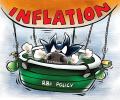
The Consumer Price Index (CPI)-based inflation is now projected to be at 5.3 per cent for 2021-22 with risks evenly balanced. In its August policy, the central bank had estimated inflation to be at 5.7 per cent due to supply side constraints, high crude oil and raw materials cost.

An average Indian spends no more than Rs 1.3 lakh per year, according to official statistics. This is close to what an average Indian earns annually. At this level of per capita income today, one litre of petrol costs one-third of an average Indian's daily income (Delhi prices), making it highly unaffordable. People in most other Asian and emerging countries find it more affordable.

The broader Nifty closed at 11,993.05, falling by 233.60 points, or 1.91 per cent. On the Sensex chart, Bajaj Finance was the top loser, dropping 4.63 per cent, followed by SBI, IndusInd Bank, Maruti, HDFC, Hero MotoCorp, Axis Bank, ICICI Bank and RIL

'Both of us are not politicians. We were forced to enter politics to counter corruption that is looting the country.'

The Reserve Bank will go for a "dovish pause" at Wednesday's policy review announcement amid developments such as a rise in inflation, government maintaining the inflation target band and a likely impact on growth due to local lockdowns on rising COVID-19 infections, analysts said on Monday. Economists at American brokerage Bofa Securities said price stability, growth and financial stability will become the prime focus areas for the central bank going forward. "The RBI MPC (Monetary Policy Committee) should deliver another dovish pause on Wednesday," it said. The policy announcement, the first for the fiscal, will come days after the government maintained the RBI's target to ensure inflation to be within 2-6 per cent band for five more years.

The bulk of the incremental profits will come from oil & gas and automobile sectors.
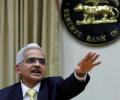
The MPC headed by RBI Governor Shaktikanta Das will announce the resolution of the meeting at around noon on Thursday.

Sensex heavyweight Reliance Industries fell 2.76 per cent. In percentage terms, major laggards were Yes Bank, Indusind Bank, RIL, ICICI Bank, HDFC and Axis Bank -- plunging as much as 6.62 per cent.

IT major Tata Consultancy Services (TCS), in its Q4FY22 results, said the company's banking, finance services and insurance (BFSI) crossed the $10 billion milestone. This includes revenue from financial products, services and platforms. For Suresh Muthuswami, who recently took over as Chairman of North America, one of the focus will be to grow this percentage going ahead. The first step to grow the US market is hiring. Muthuswami said that the company will be hiring more in the US, especially from the campuses. In FY22 TCS hired over 7,000 people in the US and going ahead too the numbers will be similar.

Poor governance and mediocre short-sighted politics are destroying the paradise that Goa was as its environment, water table, culture and way of life is drastically threatened by tourism and migration, points out Ramesh Menon.

Meesho has emerged as the second-largest player by order share in this year's festive sales till now, surpassing Amazon, while Flipkart Group platforms topped the market in both orders and gross merchandise value (GMV), according to according to a report by consultancy firm Redseer. It said Flipkart Group maintained its leadership position with a 62 per cent market share in terms of GMV during the first week of the festive season, followed by Amazon which had 26 per cent share, while the remaining 12 per cent was distributed among other e-commerce players. In terms of order volume, Flipkart Group again leads the market with about 49 per cent share and SoftBank-backed Meesho ranks second with about 21 per cent order share, according to Redseer.

The IMF on Tuesday projected an impressive 12.5 per cent growth rate for India in 2021, stronger than that of China, the only major economy to have a positive growth rate last year during the COVID-19 pandemic. The Washington-based global financial institution, in its annual World Economic Outlook ahead of the annual Spring meeting with the World Bank, said the Indian economy is expected to grow by 6.9 per cent in 2022. Notably in 2020, India's economy contracted by a record eight per cent, the International Monetary Fund (IMF) said as it projected an impressive 12.5 per cent growth rate for the country in 2021.

The repo rate, at which the central bank lends to the system, will come down to 5.75 per cent after the cut.

India Inc on Thursday pitched for continuation of reforms while ensuring tax and policy stability in the forthcoming Budget to prop up the economy hit hard by the COVID-19 pandemic. In the virtual pre-Budget consultation held with Finance Minister Nirmala Sitharaman, industry chambers said that government measures will help firmly entrench the nascent signs of recovery being currently seen in private investment. Capital expenditure by the government through enhanced infrastructure spending should in the meantime continue to support growth, CII president TV Narendran said.

'It really doesn't matter that investors getting allotments sell their IPO stock holdings on listing day because a new set of investors are entering.' 'This explains the continued rise in stock prices even after the first day of listing.'

The government has revised its divestment target downwards from Rs 2.1 trillion, as its ambitious privatisation programme has been deferred to next year.
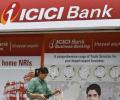
SBI is the first major bank to cut its base lending rate this year.

According to a recent Nielsen Global Online Shopping Report, Asia Pacific consumers spend most on online purchases, as a percentage of total shopping expenditure, compared to any other region globally.

Citing the massive surge in Omicron infections and the resultant impact on overall economic activities in the March quarter, Swiss brokerage UBS Securities has revised downwards its India's growth forecast for the current financial year to 9.1 per cent from 9.5 per cent earlier. However, UBS Securities does not see the third wave impact extending to the next financial year as it has revised upwards its real GDP forecast to 8.2 per cent, up from 7.7 per cent earlier, expecting the real GDP growth to remain well above the historical average. The World Bank pegs it at 8.3 per cent, unchanged from its June assessment, saying the recovery is not broad-based yet.

Anil Rego, CEO, Right Horizons, answers your personal income tax queries.

The index widened its loss towards the fag-end on emergence of intense selling in heavyweights like ITC, RIL and ICICI Bank. In percentage terms, however, Sun Pharma was the biggest loser with 9.39 per cent drop. Intra-day, the pharma major's shares tanked over 20 per cent.

One smells a rat when cases are settled for too small a price offered either by the highest bidder or the promoter -- within and outside the legal ambit of insolvency process, observes Tamal Bandyopadhyay.

Nikunj Saraf, Vice President Choice Wealth, answers your queries.

Though COVID-19 will wreak more damage to the finances of the Indian population, the insurance sector is unlikely to get hurt.
The country's economy will start witnessing a growth of 6.5 to 7 per cent from fiscal 2023 onwards, helped by various reforms undertaken by the government so far and also as COVID-19 vaccination drive progresses, Chief Economic Advisor Krishnamurthy Subramanian said. He said the second wave of COVID-19 is unlikely to have a very significant on the economy. The country's economy contracted by 7.3 per cent in fiscal 2020-21. "Together with the reforms and focus on vaccination, I expect growth to start hitting close 6.5 to 7 per cent from FY23 onwards and accelerate from there on," Subramanian said at a virtual event organised by Dun & Bradstreet.
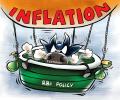
Inflation breached the upper end of the RBI's comfort level of 4 per cent plus-minus two percentage points.

The government should have mentioned clearly the specific structural reforms that were responsible for the deviation from the fiscal deficit target by half a percentage point, says A K Bhattacharya.

The financial services sector, including NBFCs and housing finance companies (HFCs), have historically been the largest borrowers from MFs.

While taking gold out of the closet to borrow money is no longer taboo in Indian households, the sharp drop in gold prices is hitting the newest loan product on the banking turf hard, explains Tamal Bandyopadhyay.

Recently, the government announced yet another ambitious scheme aimed at providing health insurance to 50 crore individuals.

It is a difficult problem and will require the Union, state governments and civil society, meaning NGOs, to work together, points out Aakar Patel.

An immediate RBI rate cut will lower lending rates for banks' MSME/retail/mortgage loans before the 'busy' industrial season ends in March.

What is killing the risk appetite of the bond buyers is the inconsistency in the central bank's approach. It needs to allow the yield to find its own level, gradually. To ensure that, the RBI may adopt a similar approach with which it handles a slipping rupee, asserts Tamal Bandyopadhyay.
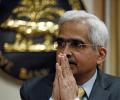
'Three external members of the first MPC are respected researchers with excellent academic background, but there is no harm in considering academicians with diverse backgrounds such as finance and labour along with economists for this body,' recommends Tamal Bandyopadhyay.
 © 2026 Rediff.com - Advertise with us - Disclaimer - Privacy Policy - Sitemap - Feedback - About us - Terms of use - Grievances